
Westborough Previous Residents by Era
A Westborough address trail changes with the date. Early material is handwritten and often loosely indexed. Later sources have more searchable fields, yet they still have gaps. The strongest approach is to choose the source that fits the era, record what it actually proves, and carry the street spelling and number forward to the next source. A deed can establish a recorded property transaction. A street list can place an occupant at a house for one annual list. Neither should be renamed as the other.
| Source | Years It Covers | Where Held | What It Shows |
|---|---|---|---|
| Early town, deed, church, and map material | 1717–1840 | Town, archive, and church holdings | Early place and family leads; indexing may be incomplete |
| Vital and town-record bridge | 1841–1850 | Archives, library copies, and town records | Event records subject to their own scope and access rules |
| Town Clerk registers and microfilm | 1851–1905 | Town Clerk, cataloged microfilm, and related indexes | Register and filmed-volume leads that need source verification |
| Selected directory runs | 1873–1941 | State Library and genealogy-indexed collections | Dated address or contact associations, not annual coverage |
| Historical newspapers | 1849–1974 | Westborough Archive | Notices and context, with title and OCR gaps |
| Sanborn map sheets | 1904, 1913, 1925 | Westborough Map Collection | Building and use context, not an occupant register |
| Westborough Street Lists | 1924–present | Westborough Archive research collection | Names, house numbers, and selected annual-list details |
| Registry computer index | 1966–today | Worcester Registry / MassLandRecords | Modern computerized deed-index access; older modes differ |
Registry books and images are described as reaching 1731 through today, but regular name indexing is not uniform across that period. The table therefore marks the reported computerized index separately. For every past-resident finding, preserve the source title, date, page or book reference, and record type. That keeps a long Westborough timeline from turning into a list of unsupported names.
Westborough Address Records Start
Start the backward search with the exact street address, current parcel details, and book and page if they are available. The research source chain is assessor card, GIS parcel context, municipal property documents, Registry deed chain, Street Lists, directories and newspapers, then maps, MACRIS, and Town Reports. Each handoff changes the key: a parcel system may use an ID, while the Registry uses a book and page or other instrument reference.
Keep old forms of the address in the same search note. Search Westborough and Westboro, vary abbreviations, and test an omitted suffix where a catalog or portal supports that approach. The research found no authoritative townwide renumbering table or legal spelling-change chronology. A changed-looking address must be supported by an actual map, street list, deed description, or town action, not by a guess based on similar names.
Westborough Previous Residents and Deeds
The Worcester District Registry of Deeds is the source for recorded land instruments affecting Westborough. It describes its records as 1731 through today. Use the parcel’s book and page where possible, open the instrument, and capture its type, recording date, parties, legal description, consideration, and prior reference. A name in an index is a lead. Reading the instrument is what tells you whether it concerns a sale, mortgage, release, trustee, estate, lien, or another transaction.
The public MassLandRecords Worcester interface has several recorded-land paths. Choose the field set that matches the evidence in hand rather than forcing an old address into one broad name search.
| Party-name search | Office, search type, last or business name, first and middle name, party type, document type, town, and recorded-date fields. |
|---|---|
| Reference search | Separate book, property, recorded-date, document, and unindexed-property modes for a known property lead. |
| Older index search | Separate Pre-1960 Grantor Index and Pre-1960 Grantee Index modes for older name work. |
| Results controls | Search, Advanced, and criteria controls; viewing, printing, and downloading were observed at inspection. |
- Record the present parcel’s situs, parcel ID, legal reference, and book/page lead.
- Use the Registry Book Search or appropriate recorded-land mode to open the current recorded instrument.
- Save the grantor, grantee, recording date, instrument type, legal description, and prior-reference information.
- Follow the earlier deed by searching the prior party in the role that matches the next transaction, then compare the legal description.
- Repeat one dated instrument at a time, marking every person as owner/deed only when the document supports that label.
- Grantor
- The party transferring an interest in an instrument. The role alone does not prove that person lived at the address.
- Grantee
- The party receiving an interest in an instrument. Read the document before treating the name as an owner or occupant.
- Chain of title
- A sequence of recorded instruments tied by legal description and references, used to follow interests backward through time.
- Legal description
- The property description in the record. It is often steadier than a street address when an older road or number changed.
Westborough Registry Records Breaks
MassLandRecords offers recorded-land name, document, book, property, and recorded-date searches, plus separate Pre-1960 Grantor Index and Pre-1960 Grantee Index modes. The Worcester Public Library research guidance reports computer indexing from 1966 forward and directs researchers to the older grantor and grantee resources. Use both older party indexes when a normal name search misses a potential Westborough deed.
Try both Westborough and Westboro in old property work. Names may also be indexed inconsistently. The Registry research found that searching, viewing, printing, and downloading were available at inspection, with popups and Adobe Reader possibly required. Current browser behavior and any changed copy fees should be checked at use time. Note: A record book can survive long before a uniform searchable name index begins.
Westborough Street Records Track Occupants
The Westborough Archive’s Research Your House guidance recommends MACRIS, Registry deeds, and Westborough Street Lists from 1924 to the present. The lists are black bound books in a wooden bookcase. They usually show names, house numbers, a same-house-last-year marker, occupation, and sometimes nationality. When a year is missing, the archive suggests checking Town Reports rather than filling the gap from an unrelated record.
The local house-history guide provides a source-specific route for Westborough previous residents research.
Appearance on a street list supports an occupant/list label for that annual list. It does not establish ownership, an exact move-in day, or an exact move-out day. The Town Clerk’s annual census and street-list process has statutory exclusions, and the public statewide central registry is not a general public name lookup. Request only the relevant year and fields, and do not treat the form’s full set of prompts as a public resident profile.
Westborough Map Records Rebuild Addresses
The Westborough Map Collection LH.012 covers 1717–2001 and includes plans, surveys, atlases, and Sanborn sheets from 1904, 1913, and 1925. For a Westborough property timeline, those three Sanborn dates can test changes in building footprint, number of stories, use, nearby roads, and business labels. They cannot identify every resident.
The archive map inventory places the three Sanborn years beside broader Westborough mapping resources.
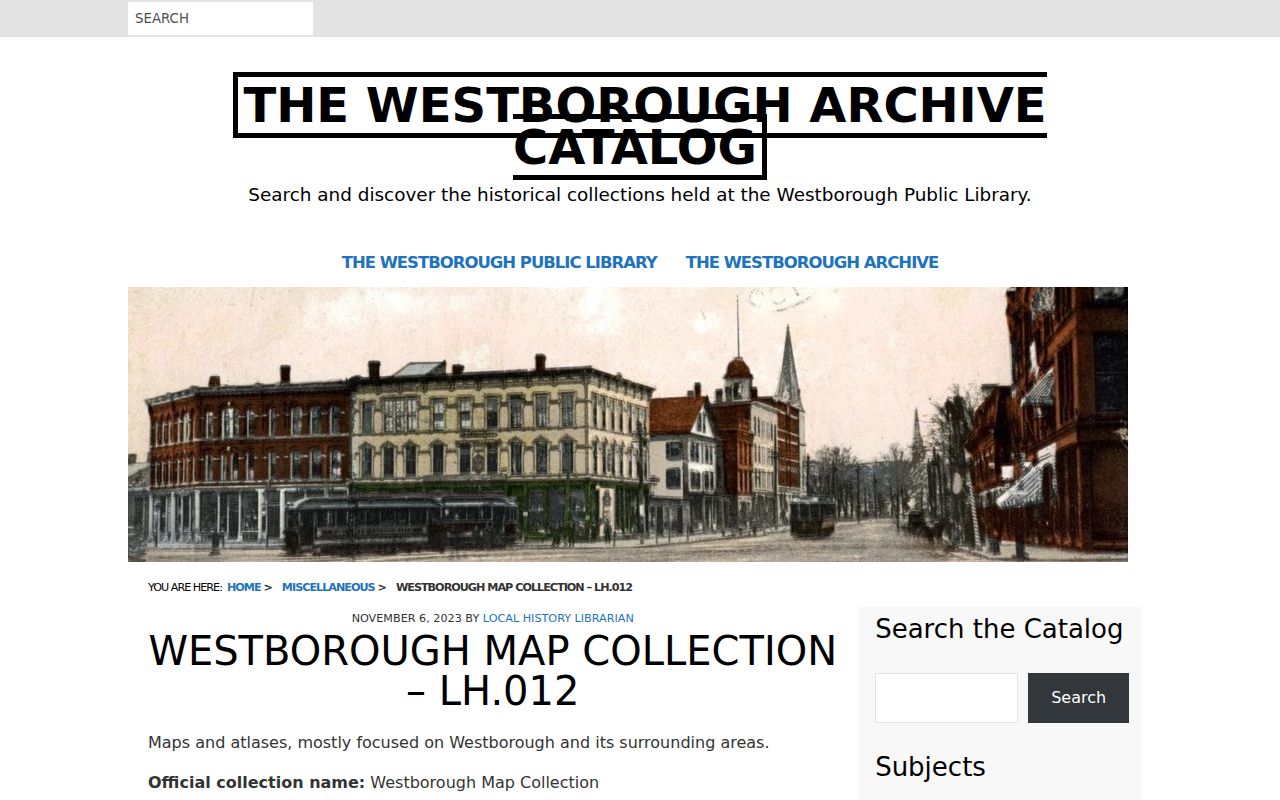
Compare a map sheet with the street-list year and deed legal description before joining records. The archive also holds road records from 1729–1784 in Town Administrative Documents OD.001. Those can explain a colonial road or neighbor description that does not resemble a current address. A map is address context, not a substitute for an occupant list or title instrument.
Westborough Past Resident Trail
Ownership and occupancy are different questions. Use the household layer after the deed chain, not in place of it. The Westborough Room’s documented collection includes census material, town and organizational directories, historic newspapers, and selected church history. In-library Ancestry Library Edition and American Ancestors are additional local research channels. Census material can help compare a household, while a Westborough directory or Street List may provide the address association for a specific edition or year.
Use this documented chain when someone asks who lived here before: address and deed reference → Street List or directory → census material at the Westborough Room → newspaper or archive context → source-labeled timeline. The directory collections themselves are detailed on the Westborough city directory page. Do not make a directory entry into an ownership claim, and do not make a deed party into an occupant without a source that actually supports it.
Historical newspapers offer another check. The Westborough Archive’s runs extend from the Westborough Messenger in 1849–1850 through related titles ending in 1974, with gaps. Digital microfilm is searchable, browseable, cropable, and printable, but OCR can miss names. A relevant notice can explain a household change, yet it should stay labeled as a newspaper report.
Westborough Previous Residents, Labeled
Clear labels prevent a house-history file from overstating what it found. A timeline may include people connected to an address for different reasons. Add the record type and date beside every name. That makes it possible to compare a street-list occupant, a directory reference, and a deed party without turning them into a single unqualified claim.
| occupant/list | Named at the house in a dated Street List; it does not prove ownership or exact dates of residence. |
|---|---|
| directory | Named or associated with an address in one published edition; collection scope and omissions remain possible. |
| owner/deed | Named in a recorded instrument after the document and legal description are read in context. |
| business | An address association from a business or notice source; it is not automatically a household link. |
| unknown association | A lead that needs another record before it belongs in the property timeline. |
When a record is not online, Massachusetts Public Records Law, MGL c.66 §10, provides an access route for existing public records. A written request is preferred. Ask the responsible Westborough office for the narrow record, year, format, and cost estimate. The state framework calls for an initial written response or denial within ten business days, while production timing can depend on scope, redaction, and technical work.
Lawful use. Westborough house-history research is appropriate for family history, estate questions, and personal property curiosity. Never use historical or current personal details to harass, track, or harm anyone.
Westborough House History Help
The Westborough Archive, the Westborough Room, and the Westborough Historical Society offer different local research channels. The Historical Society’s Sibley House museum at 13 Parkman Street is open by appointment, with research and genealogical help available by request. Its collections include maps, photographs, tools, textiles, art, and other local objects that can add place context after the address trail is grounded in dated records.
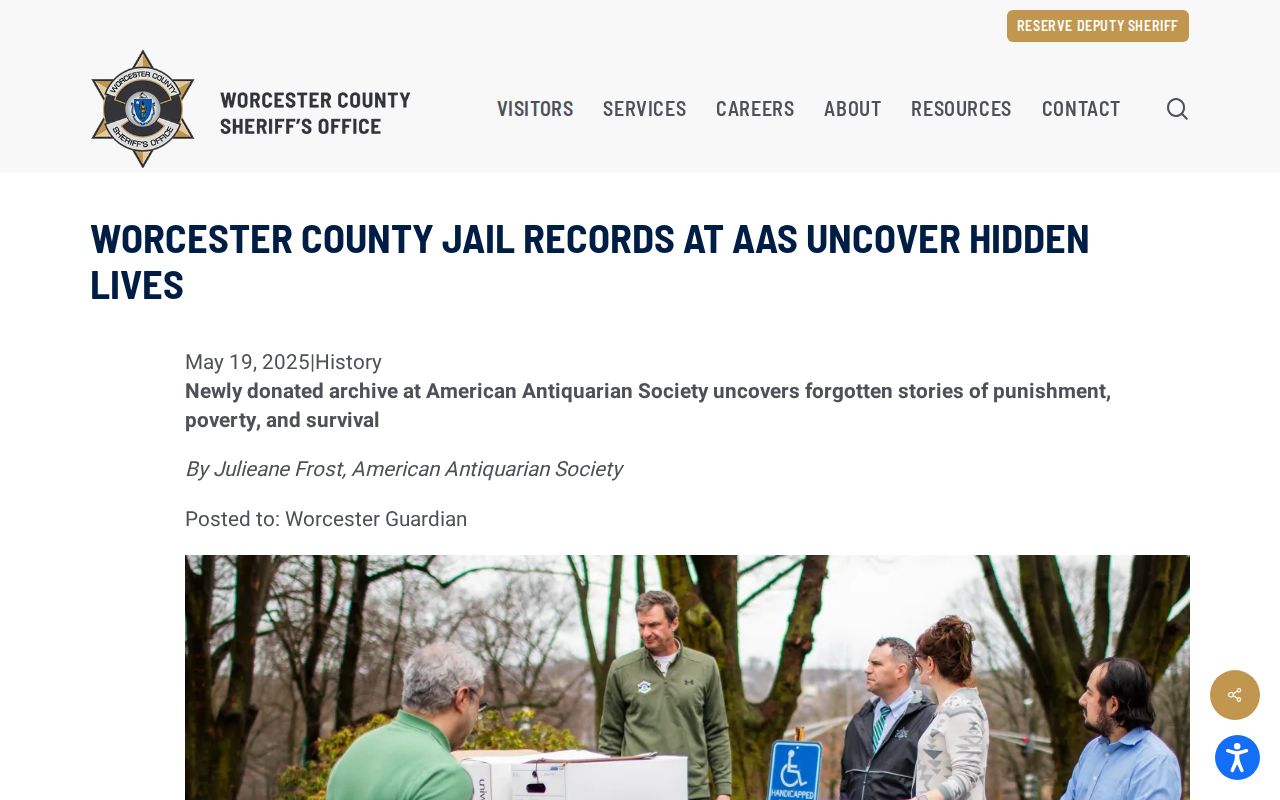
The Worcester County jail-ledger collection at the American Antiquarian Society is a narrower historical lead, not a resident directory. The source describes about 100,000 records, mostly 1860–1900, including 45 ledgers titled Prisoners Confined to the Worcester Jail. A Westborough connection requires original-ledger and custodial verification plus careful context.
The historical archive record illustrates a specialized lead that must remain separate from a Westborough previous-resident claim.
For an early address, the Westborough Archive’s Reed Collection can also offer deeds, diaries, letters, maps, wills, and government documents. Start an appointment or archive question with a street, date range, alternate town spelling, and the sources already checked. That keeps the request focused and makes clear whether the goal is an occupant/list, directory, owner/deed, or historical association.